
Why do top coaches increasingly prefer the 3-4-3 formation?
In modern football, choosing a tactical scheme is no longer just a story of numbers arranged on a whiteboard. Among the prevailing schemes, 3-4-3 diagram It stands out as a tactical trend chosen by many top coaches, from those who pursue control play like Mikel Arteta to masters of counter-attacking defense like Antonio Conte.
So what makes this scheme so popular? Is it because it creates the perfect balance between attack and defense? Or is it because it is the most suitable tool to deal with the high speed of modern football? This article 78win com We will analyze the reasons in more detail with you 3-4-3 diagram increasingly popular.
What is the 3-4-3 formation? Definition is not just about quantity
It is a reflection of the thinking, playing philosophy and level of tactical flexibility that each coach wants to convey to his team.
Basic structure and operation
Diagram 3-4-3 includes 3 central defenders, 4 midfielders (including 2 wing-backs operating along the sideline) and 3 strikers – with 1 central striker, 2 wingers or defenders. Contrary to its somewhat defensive appearance, this is actually an extremely mobile system, allowing flexible switching between 5-4-1 when defending and 3-2-5 when attacking.
This turns 3-4-3 diagram into a versatile toolkit – both helping the team stick to the organizational structure and having enough options to attack the edges, penetrate the middle or quickly change status.
Ideal in the era of “transitional” football
In an era where football is determined by the speed of counterattacks, 3-4-3 diagram Helps teams have up to 3 central defenders to cover when losing the ball, while maintaining up to 5 players in the attack when launching attacks. This is the factor that makes it superior to the traditional 4-3-3 or 4-2-3-1 formation, which easily breaks down in the midfield when the opponent presses quickly.
Why do modern coaches prefer the 3-4-3 formation?
Create a balance between defense and attack
According to tactical analysis data from 78win com, teams using the 3-4-3 formation have a clean sheet rate 12% higher than teams playing with 4 defenders when facing opponents with high pressing. At the same time, they also had an average of 1.8 more combinations in the opponent’s third of the field per match.
This is the reason why many coaches prefer this scheme when facing strong teams and want to maintain offensive pressure without sacrificing the safety of the back line.
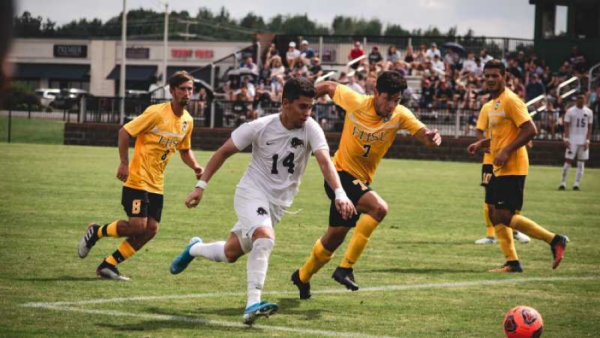
What is the 3-4-3 formation? Definition is not just about quantity
Maximize the wing-back’s capabilities
Wingers are no longer simply “attacking support defenders” or “deep-lying wingers”. In the 3-4-3 formation, they become a real tactical pivot. Names like Reece James (Chelsea), Achraf Hakimi (PSG), Alphonso Davies (Bayern Munich)… all became main detonators when allowed to operate freely in this role.
78WIN Sports once analyzed that when this diagram is operated properly, the two wing-backs not only take on the role of creating mutations but also help pull the opponent’s squad, creating space for wing strikers like Saka, Martinelli or Son Heung-min to exploit from the second line.
Flexibility in ball rotation and transitions
When defending, the 3-4-3 formation can easily retreat to 5-4-1 or 5-3-2 in just a few seconds thanks to the ability of the two wing-backs to close in. When attacking, the 2 central midfielders will retreat to support the 3 central defenders in deploying the ball, creating conditions for the 2 wingers to push high and the central striker to have more coordination options.
This transition makes it difficult for opponents to catch cards and be drawn into the kicking style that the proactive team sets up. In particular, experts at 78win com commented that this scheme is very suitable for teams that do not own too many superstar players but need to be methodically organized and take advantage of the team.
3-4-3 formation in real combat: Typical teams and coaches
Antonio Conte – The man who revived the 3-defender scheme in the Premier League
At Chelsea, Conte once turned a shabby team into a champion in just one season using the 3-4-3 formation. With the central defender trio Luiz – Cahill – Azpilicueta, and the wing-back pair Alonso – Moses, he created a system that is extremely difficult to penetrate and possesses sharp counter-attacking ability.
Mikel Arteta – Tactical variation at Arsenal
Although Arsenal currently mainly plays 4 defenders, Arteta still often switches to a 3-4-3 formation in big matches or when lacking key personnel. This is how he maintains the team structure but can still react flexibly to the opponent’s playing style. In particular, Bukayo Saka in the wing-back role was a creative tactical choice that helped Arsenal keep valuable points.
Gareth Southgate – Application in the England team
Southgate is not always popular with fans, but it cannot be denied that the 3-4-3 formation helped the England team reach a high level of balance at the most recent EURO and World Cup. When full-backs like Kieran Trippier or Luke Shaw were pushed into the right position, England controlled the match better, and conceded less than 0.5 goals/match during the group stage.
Limitations and conditions of effective operation
However, like all tactical plans, it is not a universal “elixir”. Effective application depends on the appropriate coaching philosophy, personnel and willingness to change in each specific match.
To follow similar in-depth analysis and stay up to date with top clubs’ chart trends, you can visit 78win com, where category Thể Thao 78WIN Always closely update every small change on the map of the best coaches in the world.
High requirements for physical strength and tactical awareness
Not every team has enough personnel to operate well 3-4-3 diagram. The two wing-back positions have to play almost non-stop, both taking on the role of border defense and creating breakthroughs in attack. If either of them does not ensure physical strength or has poor positional judgment, the formation will be easily penetrated by the opponent on both wings.
Why do modern coaches prefer the 3-4-3 formation?
Depends on the quality of the midfield
The two central midfielders must be extremely comprehensive: know how to recover the ball, know how to launch, shield the three central defenders behind and be ready to rise when needed. This is a weakness if the team lacks squad depth or loses a key player due to injury.
Conclude
It is no coincidence that more and more top coaches choose it 3-4-3 diagram as a tactical basis. With the ability to flexibly change states, make the most of collective strength and optimize the role of specific positions such as wing-back, this is the ideal choice in today’s high-speed football environment and complex tactical organization requirements.
If you love football, like to analyze tactics or simply want to better understand why your favorite team plays the way they do – then the 3-4-3 diagram is the ideal starting point to understand modern tactical thinking.