
As Cristiano Ronaldo blew out the candles on his 41st birthday on February 5, 2026, the footballing world paused to celebrate a career defined by unprecedented longevity. Yet, the festive mood was quickly overshadowed by a growing storm in Riyadh. Far from the sunset years most expected when he moved to the Middle East, the Portuguese icon finds himself at the center of a high-stakes power struggle that threatens to derail his final chapter with Al-Nassr.
The “Land of Smiles” for Ronaldo has recently turned into a landscape of frustration. Reports from early February 2026 indicate a significant rift between the superstar and the Saudi Public Investment Fund (PIF), the sovereign wealth fund that serves as the financial engine for the league’s rapid ascent. For the first time since his arrival, the “CR7” brand is in open conflict with the very system that brought him there.
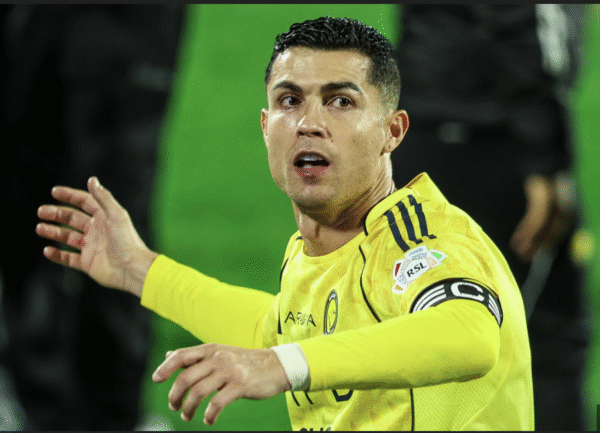
The 41-Year-Old Fire: Why Ronaldo is Refusing to Play
Despite his age, Ronaldo’s competitive fire remains undimmed, often manifesting in ways that split public opinion. In a move that sent shockwaves through the Saudi Pro League (SPL), Ronaldo reportedly sat out a recent clash against Al-Riyadh as a deliberate act of protest. While initial whispers suggested a rest day or minor knock, insiders have confirmed that the decision was a calculated message to the club’s hierarchy and the PIF.
The root of this “meltdown” is not a lack of fitness—Ronaldo remains one of the league’s top scorers even at 41—but rather a perceived lack of ambition within Al-Nassr’s front office. The veteran forward is reportedly “furious” at the club’s passive approach during the January 2026 transfer window, where reinforcements were scarce while championship rivals continued to stack their decks with global talent.
The Benzema Factor: A Transfer That Sparked a Storm
If the lack of recruitment at Al-Nassr was the tinder, the transfer of Karim Benzema was the spark. In a move that defied conventional league parity, Benzema—Ronaldo’s former strike partner at Real Madrid—completed a shock mid-season move from Al-Ittihad to Al-Hilal. For Ronaldo, this wasn’t just another transfer; it was a tactical betrayal.
Al-Hilal, already the dominant force in Asian football and the current league leaders, secured Benzema on a free transfer after he fell out with Al-Ittihad’s management. To Ronaldo, this move further unbalances the league, effectively handing a “super-team” even more firepower while Al-Nassr struggles to provide Jorge Jesus with the necessary depth to compete. The sight of a direct rival being “gifted” a reigning Ballon d’Or caliber talent has led Ronaldo to question whether the playing field is truly level.
Understanding the PIF Powerhouse: From Riyadh to Tyneside
To understand Ronaldo’s frustration, one must look at the unique ownership structure of Saudi football. In June 2023, the Public Investment Fund took a 75% stake in the nation’s “Big Four” clubs: Al-Nassr, Al-Hilal, Al-Ittihad, and Al-Ahli. This centralized model was designed to kickstart a global media product, but it has created a strange internal dynamic where the same owner controls the four biggest competitors.
The PIF’s influence isn’t limited to the desert. Their acquisition of Newcastle United in the English Premier League serves as the global blueprint for this strategy. By 2025, Newcastle had transformed into a consistent Champions League contender, winning the Carabao Cup and proving that PIF’s “halo” strategy works when investment is consistent. However, in the SPL, this centralized control means that transfer approvals and budget allocations often feel like a zero-sum game, leading to the “political power” complaints recently voiced by the Al-Nassr coaching staff.
Selective Investment or Strategic Shift? The Al-Nassr Dilemma
Ronaldo’s camp believes that Al-Nassr is being neglected in favor of Al-Hilal, which is often viewed as the “Crown Jewel” of Saudi football. While Al-Hilal has been active in securing high-profile names like Pablo Marí and Saimon Bouabré, Al-Nassr has been told to adhere to new, stricter sustainability regulations introduced by the Ministry of Sport in July 2025.
Jorge Jesus recently admitted that the club lacks the “political power” to force through the transfers needed to catch the league leaders. For a man who has built his entire legacy on being the undisputed number one, the realization that he might be playing for the PIF’s “secondary” project is a bitter pill to swallow. As he navigates this turbulent period, fans looking for reliable ways to follow his journey and the league’s shifting dynamics often look for stable entry points like m88 link to stay updated on the latest match schedules and player news.
Conclusion: The Final Stand of a Legend
Cristiano Ronaldo at 41 is a man in a hurry. He knows that his time on the pitch is finite, and he is unwilling to spend his remaining months as a mere marketing tool for a league that he feels is working against his competitive interests. His recent protest is a gamble—a demand for the PIF to reinvest in the Al-Nassr project or risk losing the man who put the league on the map in the first place.
Whether the PIF will blink and provide the reinforcements Ronaldo demands remains to be seen. What is certain, however, is that even at 41, Cristiano Ronaldo remains the most influential, controversial, and captivating figure in world football, capable of stopping a multi-billion-dollar league in its tracks with a single gesture of defiance.