
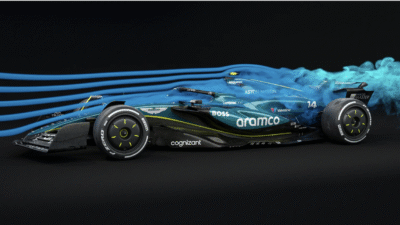
How Race Car Aerodynamics Shape Betting Statistics
The sharp airflow through cars influences their lap times and race performance. It may cause significant changes in betting statistics and odds. Analyzing that connection helps to understand movements of odds and statistics before and during the races.
The Basics of Aerodynamics in Racing
Any race car needs to have enough aerodynamics for its fast and reliable running. In case of aerodynamic updates, racing odds will be affected depending on the adjustments that the team introduces before the key sessions and comparing that with betting markets and tools that are available after 1xbet cambodia login. Engineers develop special car bodies with the ability to control airflow and apply different pressures. As a result, they achieve additional downforce that presses a car to the surface.
More downforce leads to better grip in the corners and at high speeds. The less drag makes cars run faster in the straight lines. It is necessary to balance these parameters for specific circuits.
Cars with higher downforce will have better performances in the circuits with many corners. Low-drag cars will show good results in circuits with many long straights. All these aspects directly affect the race pace and finishing order.
How Aerodynamics Influence Performance Data
The aerodynamics influence on racing causes significant changes in statistical data that betting sites consider while calculating odds and lines. You can get this information after a 1xbet registration to access the casino online platform. Sometimes lap times may be influenced by airflow changes. The difference of just 0.1 seconds may cause significant changes in finishing positions for long-distance races.
It is possible to see performance improvements in wind tunnels even before cars appear at the tracks. Usually, teams achieve 0.3 seconds improvement per lap in these tests. This means that after 50 laps a car will have an enormous advantage.
During the races, you can analyze such metrics as speed and time that a car spends in straight and corner lines. In case a car has a good airflow and downforce, it will show high performance in cornering.
Statistics metrics affected by aerodynamics include the following:
- Difference in average lap times between racers
- Top speed reached in the straight lines
- Speed at the cornering
- Level of tire wear associated with the downforce
All these metrics become important for the betting models.
The Link Between Aerodynamics and Betting Odds
The betting odds are constantly changing in dependence on the expectations of performances. Any aerodynamic update can lead to fast reactions in the bookmaker’s calculations. A change in car design like new wing shape leads to fast adjustment of odds.
Practice statistics becomes the basis for understanding what changes were made and how they influence car performance. For instance, the car’s 0.2 seconds per lap improvement is followed by the change in odds that occurs quickly because it reflects expected finishing positions.
The reaction during live markets takes even shorter periods. In case of better airflow, a car may overtake other cars more easily and this fact creates betting opportunities.
Such models use a huge amount of data about historical performance and recent aerodynamic changes of cars. They consider thousands of variables per each race weekend and small changes influence probabilities.
Real Data Patterns Seen in Races
The real racing statistics demonstrates obvious patterns in relation to the aerodynamic efficiency of race cars. The higher airflow efficiency becomes, the more stable cars will have lap times. Such stability contributes to better finishing positions.
There is an example of the data set where the cars with maximum downforce gained 5 percent of extra speed in cornering. It led to a decrease of 0.47 seconds in lap times. There was another data set showing that decreased drag caused the increase of straight line speed by 8 km/hour.
Although it sounds like insignificant changes, it influences the dynamics of races greatly. A car with better straight speed becomes much easier to overtake opponents and defend positions. This becomes influential for the live betting odds.
The strategy of pit stops also relates to aerodynamic performance. The higher efficiency of airflow makes cars more comfortable to drive in long races without stopping.
Why Small Changes Matter So Much
It is worth noting that aerodynamics relies on fine margins of car designs. A small change in wing angle leads to a complete change of airflow distribution which influences speed and tire wear.
Engineers spend hundreds of hours analyzing airflow in simulations and at the test tracks. Their goal is to get even hundredths of seconds faster. Although it seems insignificant, it is still crucial factor for the races.
From the perspective of betting statistics, such aerodynamic efficiency provides a certain edge over rivals. Drivers will take a few positions in front which changes all race expectations and bet payoffs.
Responsible Approach to Betting on Racing
Betting on races becomes an entertaining activity and never a source of income. The house always takes the edge in the long run. Knowledge about aerodynamics helps to have a better comprehension but does not guarantee wins.
Here are some suggestions on maintaining a balanced approach to betting:
- Stick to your budget plan in advance
- Do not chase lost money when you have an unlucky situation
- Focus on your learning rather than placing bets frequently
- Make breaks for relaxation
Aerodynamics is an important aspect for race performances. Airflow efficiency makes cars run faster and more reliably. It influences odds before and during races.